








Animal feed production and distribution
Animal feed production and distribution
Type 3: Borderland with fragile context and underdeveloped regional integration infrastructure.
Business Model Description
Establish local feed production units utilizing drought-resistant crops and agricultural byproducts. Process and package feed for various livestock (cattle, goats, sheep, poultry, camels). Distribute feed through a network of agro-dealers, cooperatives, and direct sales to pastoralists. Target livestock keepers, dairy farmers, and poultry producers in Karamoja and West Pokot. Finance operations through blended capital—anchor investor equity, concessional loans, and government or donor-backed grants for climate-resilient inputs and equipment.
How is this information gathered?
Cross-border investment opportunities with potential to contribute to sustainable development are based on Borderlands SDG Investor Maps.
Disclaimer
UNDP, the Private Finance for the SDGs, and their affiliates (collectively “UNDP”) do not seek or solicit investment for programmes, projects, or opportunities described on this site (collectively “Programmes”) or any other Programmes, and nothing on this page should constitute a solicitation for investment. The actors listed on this site are not partners of UNDP, and their inclusion should not be construed as an endorsement or recommendation by UNDP for any relationship or investment.
The descriptions on this page are provided for informational purposes only. Only companies and enterprises that appear under the case study tab have been validated and vetted through UNDP programmes such as the Growth Stage Impact Ventures (GSIV), Business Call to Action (BCtA), or through other UN agencies. Even then, under no circumstances should their appearance on this website be construed as an endorsement for any relationship or investment. UNDP assumes no liability for investment losses directly or indirectly resulting from recommendations made, implied, or inferred by its research. Likewise, UNDP assumes no claim to investment gains directly or indirectly resulting from trading profits, investment management, or advisory fees obtained by following investment recommendations made, implied, or inferred by its research.
Investment involves risk, and all investments should be made with the supervision of a professional investment manager or advisor. The materials on the website are not an offer to sell or a solicitation of an offer to buy any investment, security, or commodity, nor shall any security be offered or sold to any person, in any jurisdiction in which such offer would be unlawful under the securities laws of such jurisdiction.
Region
Sector Classification
Food and Beverage
Food and Agriculture
Borderland development need
Livestock is the main source of livelihood in the borderland, with over 5 million head of cattle, goats, sheep, and camels. However, drought, disease, and poor veterinary services lead to high mortality and low productivity. Most animals are sold live, with minimal local processing, limiting income and adding costs. Insecurity and weak infrastructure further disrupt markets. With 45% of the population facing acute food insecurity, improving livestock systems is critical to resilience and economic growth. (11, 20, 21, 22)
Borderland policy priority
Both CIDP and KIDP3 highlight livestock as a driver of resilience, food security, and economic growth. In West Pokot, the County plan focuses on breed improvement, feed reserves, and operationalizing processing facilities such as the Nasukuta abattoir to retain value locally. In Karamoja, the local government prioritises breeding, disease surveillance, and value addition in meat, milk, and hides. Both aim to improve market access, veterinary services, and cross-border trade, especially for youth and women in pastoral systems. (1, 2)
Gender inequalities and marginalization issues
Livestock production and processing offer key entry points for empowering women and marginalized groups, who often manage small ruminants and poultry. These activities generate income, support food security, and are more accessible to those with limited land or capital. Expanding value chains and services tailored to women and youth can drive inclusion and build resilience. (12, 13)
Investment opportunities introduction
The borderland offers high-return investment opportunities in livestock production and processing, from meat and dairy value chains to animal health and feed systems. With strong local demand, large herd sizes, and policy backing, investments in abattoirs, milk processing, vet services, and feed supply can unlock value, boost incomes, and strengthen regional trade. (1, 2)
Key bottlenecks introduction
Recurrent droughts and disease outbreaks weaken productivity, while limited access to quality feed and vet services constrains herd health. Insecurity (driven by cattle raiding, border tensions, and weak enforcement) disrupts markets and discourages investment. Poor infrastructure and low processing capacity further limit value addition. (1, 2, 9, 12)
Meat, Poultry and Dairy
Pipeline Opportunity
Animal feed production and distribution
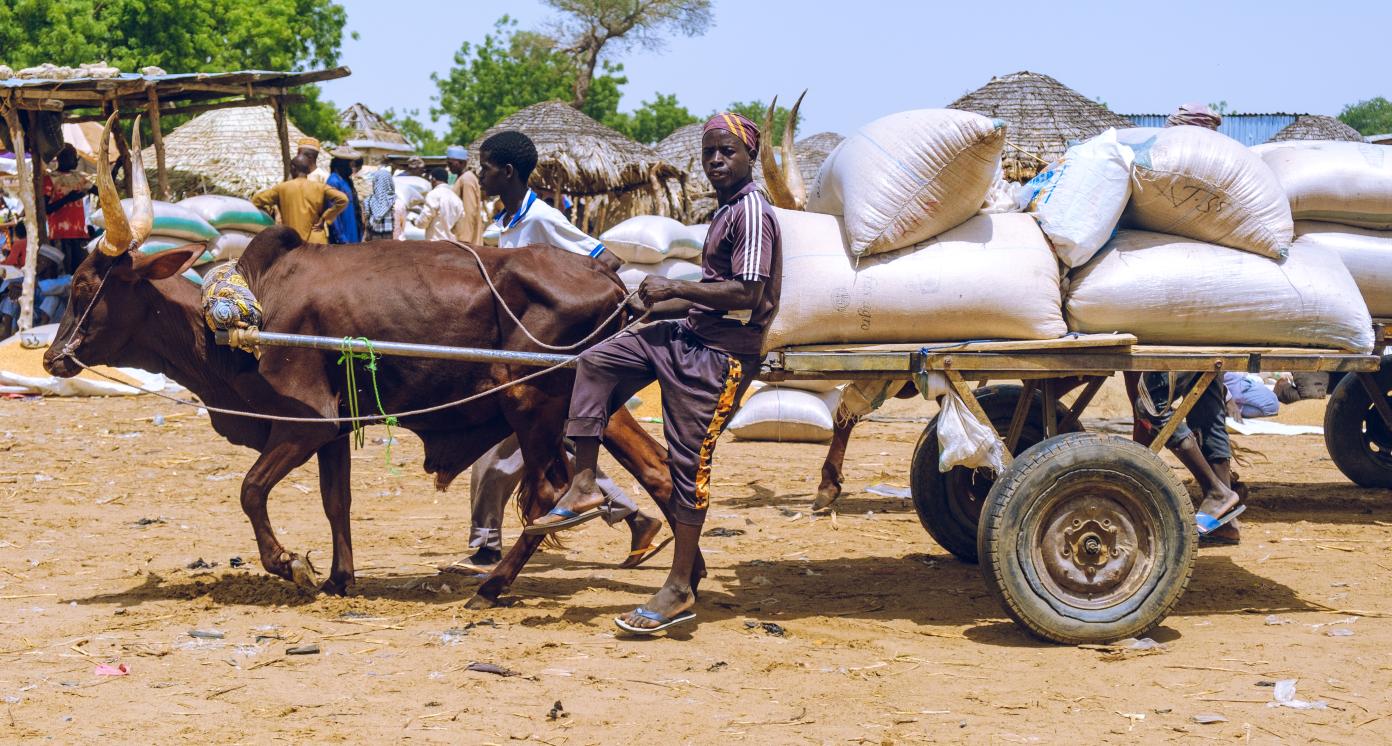
Establish local feed production units utilizing drought-resistant crops and agricultural byproducts. Process and package feed for various livestock (cattle, goats, sheep, poultry, camels). Distribute feed through a network of agro-dealers, cooperatives, and direct sales to pastoralists. Target livestock keepers, dairy farmers, and poultry producers in Karamoja and West Pokot. Finance operations through blended capital—anchor investor equity, concessional loans, and government or donor-backed grants for climate-resilient inputs and equipment.
Business Case
Market Size and Environment
< USD 50 million
With over 5 million livestock in Karamoja and West Pokot, demand for animal feed is year-round, especially during droughts. Growth is driven by expanding dairy and meat value chains, climate shocks, and a shift toward feed-based livestock systems (e.g., Nasukuta abattoir, Lelan dairy). (1, 2, 29)
Indicative Return
> 25%
Returns of 30–40% are achievable through low-cost inputs (fodder, crop residues), visible productivity gains, and decentralized models. Regional studies by SNV and ILRI show 25–45% margins for small-scale feed producers in similar dryland contexts. (29, 30, 31)
Investment Timeframe
Short Term (0–5 years)
Fodder crops mature in 3–5 months, with immediate demand from pastoralists and cooperatives. ILRI and SNV pilots show positive cash flow in year one and full ROI within 2–4 years due to quick adoption and visible livestock health improvements. (29, 30, 31)
Ticket Size
USD 500,000 - USD 1 million
Market Risks and Scale Obstacles
Business - Supply Chain Constraints
Market - Volatile
Capital - Requires Subsidy
Expected Financing Model
Blended financing (risk sharing and public support)
IOA Business Criteria
Strong livestock demand, visible productivity gains, and proven willingness to pay justify blended financing and demonstrate commercial viability once early-stage risks are reduced. (29, 30)
Targets localized feed production using drought-tolerant inputs, with defined customer segments (pastoralists, cooperatives), delivery channels, and financing needs. (31, 34)
Can expand via cooperative models, contract farming, and agro-dealer networks across ASAL regions, especially with policy and donor support for climate resilience. (31, 34)
Pilots in Kenya and Uganda (e.g. Agriterra) show viable models with strong uptake when inputs, distribution, and financing are locally embedded. (24, 25)
Impact Case
Sustainable Development Need
Chronic feed shortages during dry seasons lead to livestock weight loss, reduced milk yields, and high mortality; most pastoralists lack access to affordable, quality feed alternatives. (12, 13)
Climate shocks are increasing in frequency, yet local feed systems remain underdeveloped; overgrazing degrades rangelands, deepening food insecurity and poverty. (12, 13, 20)
Post-harvest losses of crop residues and underuse of drought-resistant fodder crops represent missed economic and environmental opportunities for circular, climate-resilient feed production. (12, 13, 20)
Gender & Marginalisation
Women and youth are underrepresented in livestock input supply chains and lack access to training, credit, and markets needed to participate in feed production and distribution. (6, 35)
Land tenure barriers restrict women's ability to grow or harvest fodder crops. (6, 35)
Expected Development Outcome
Increases livestock productivity and resilience by addressing chronic dry season feed shortages, reducing animal mortality and improving food security. (12, 13, 20)
Promotes sustainable land use by shifting from overgrazing to climate-resilient fodder systems, reducing environmental degradation in ASAL regions. (12, 13, 20)
Reliable access to feed reduces competition over grazing land and water, lowering the risk of cross-border conflict and cattle raiding in West Pokot and Karamoja’s contested rangelands. (12, 13, 20)
Gender & Marginalisation
Generates inclusive income opportunities for women, youth, and pastoralists through decentralized feed production and distribution networks. (6, 35)
Expands women’s participation in feed production and distribution by supporting women-led cooperatives and access to climate-resilient inputs. (6, 35)
Provides youth and marginalized pastoralists with training, credit access, and market linkages to join formal livestock value chains. (6, 35)
Primary SDGs addressed
1.1.1 Proportion of the population living below the international poverty line by sex, age, employment status and geographic location (urban/rural)
In 2020, the poverty rate was 66% in Karamoja and 57% in West Pokot. (1, 2)
The government of Uganda aims to reduce the incidence of poverty in Karamoja to 42.2% over the next five-year period. (1)
2.3.1 Volume of production per labour unit by classes of farming/pastoral/forestry enterprise size
Data only available for Uganda at national level: 5.74 USD
N/A
2.4.1 Proportion of agricultural area under productive and sustainable agriculture
13.2.1 Number of countries with nationally determined contributions, long-term strategies, national adaptation plans, strategies as reported in adaptation communications and national communications
N/A
N/A
Secondary SDGs addressed
Directly impacted stakeholders
People
Gender inequality and/or marginalization
Planet
Corporates
Public sector
Indirectly impacted stakeholders
People
Gender inequality and/or marginalization
Planet
Corporates
Public sector
Outcome Risks
Environmental degradation may occur if land conversion for fodder crops leads to deforestation or overuse of water resources in fragile ecosystems.
Elite capture of distribution networks may exclude smallholders and pastoralists, reinforcing local inequalities and market distortion.
Gender disparities could widen if feed enterprises are male-dominated, limiting women’s participation in production and decision-making.
Resource conflict may arise over land, water, or grazing rights if feed production reduces access to communal rangelands.
Impact Risks
Low adoption of climate-resilient fodder or poor-quality feed inputs may fail to improve livestock productivity, limiting livelihood benefits.
Exclusion of women and marginalized groups from ownership or training may reinforce existing inequalities in access to resources and markets.
Overuse of land and water for feed cultivation without regulation may degrade ecosystems and reduce long-term sustainability.
IMP Impact Classification
What
Increases livestock productivity, food security, and incomes through accessible, climate-resilient animal feed systems.
Who
Targets pastoralists, agro-pastoralists, women, and youth in Karamoja and West Pokot.
Risk
Low uptake, exclusion of marginalized groups, or environmental strain may limit inclusive and sustainable impact.
Enabling Environment
General Policy Environment
Karamoja Integrated Development Plan 3 (KIDP3): Promotes climate-resilient livestock production and fodder value chains in Karamoja, emphasizing rangeland rehabilitation and feed availability during dry spells. (1)
West Pokot County Integrated Development Plan (CIDP): Prioritizes fodder production, feedlot development, and pasture conservation to increase livestock productivity and drought resilience. (2)
Uganda Agriculture Sector Strategic Plan (ASSP II): Supports development of livestock feed systems and rangeland management to boost productivity and reduce vulnerability to climate shocks. (36)
State Department for Livestock Development (SDLD)'s Strategic Plan (2023-2027): Provides roadmaps for feed and fodder development, including investments in fodder banks and private sector engagement in feed processing. (37)
Kenya Climate Smart Agriculture Strategy (2017–2026): Encourages feed production from drought-tolerant crops and agro-waste, supporting adaptation and sustainability in arid areas. (38)
General Cross-border Trade Policy and Regulatory environment
EAC Customs Management Act (2017): Facilitates duty-free trade in agricultural inputs, including feed ingredients, across EAC countries, lowering production costs and enhancing regional feed supply chains. (43)
IGAD Regional Strategy (2021–2025): Promotes cross-border pastoral livelihoods and market integration, supporting harmonized regulations for feed inputs and livestock trade across border regions. (44)
EAC Simplified Trade Regime (STR): Allows small traders to move low-value agricultural goods, including feed and fodder, across borders with minimal documentation, boosting informal and women-led trade. (45)
AfCFTA Agreement (2021): Aims to eliminate trade barriers across Africa, enabling access to wider regional feed markets and encouraging private sector investment in feed processing and distribution. (46)
EAC Sanitary and Phytosanitary (SPS) Protocol (2020): Standardizes safety regulations on livestock and feed products, enabling compliant cross-border trade and reducing risks of animal disease transmission. (47)
Capital structure and funding
Sources of Capital: Current capital is a mix of domestic government funds (e.g., agricultural stimulus), donor-backed concessional finance (e.g., IFAD, SNV, EU), and NGO grants. Future scaling will require blended finance, with anchor investors supported by concessional and public guarantees. (23, 30, 31)
Average Capital Size: Small-scale feed ventures receive $100K–$300K in grants or loans. Larger integrated models in similar regions (e.g., Kenya’s fodder hubs) require $500K–$800K. Ticket size depends on processing scale, land access, and infrastructure needs. (29)
Trends of Capital Flows: Most current flows are development-partner driven, focusing on livestock resilience, dairy hubs, and cooperative strengthening. There is growing interest in climate-resilient agri-finance, but limited private equity in remote or conflict-prone areas. (30, 31, 32)
Impact of Conflict on Capital Flows: Insecurity and cattle raiding raise logistics and insurance costs, deterring commercial investors. Government-led disarmament, border patrols, and peacebuilding efforts have improved conditions but financing remains risk-sensitive. (4)
Development Partner Support: Development partners (e.g., IFAD, FAO, EU) fund livestock productivity, fodder systems, and cooperative-based production. These funds often include components for climate adaptation, youth employment, and women-led agribusiness. (30, 31, 32)
Financial incentives
Agricultural Credit Facility (Uganda): Managed by the Bank of Uganda, this credit line offers concessional loans to agro-enterprises, including feed producers, with interest rates below market and long repayment periods. (48)
Agricultural Finance Corporation (Kenya): Provides subsidized loans for input suppliers and livestock businesses, including financing for fodder production and processing equipment under government-supported schemes. (49)
VAT Exemptions on Agricultural Inputs: Both Kenya and Uganda provide VAT exemptions or deferral schemes on agricultural machinery, irrigation equipment, and some feed inputs, lowering the capital burden for early-stage investment. (50)
EAC Industrialization Policy (2012–2032): Encourages investment in agro-processing and input manufacturing across member states with tax breaks, trade facilitation, and harmonized standards benefiting cross-border feed distribution. (51)
Security Environment
In border areas, frequent cattle raids fuel insecurity, disrupt livestock movement, and threaten supply chains for feed distribution and raw material sourcing. (4, 52, 53)
Porous borders and weak enforcement facilitate livestock theft and fuel disputes over shared grazing corridors, affecting trust and cooperation across trading partners and feed buyers. (4, 52, 53)
Risk mitigation strategies
Support cooperative-led feed aggregation and distribution to reduce elite capture, ensure price transparency, and enhance participation of women and marginalized producers.
Establish formal land access MoUs with local authorities and elders for feed production zones, backed by participatory land mapping to prevent tenure-related disputes and conflicts.
Prioritize training, ownership, and leadership roles for women in feed cooperatives, offer tailored microfinance, and integrate gender safeguards into all production and governance structures.
Collaborate with EAC and IGAD platforms to align veterinary, trade, and taxation protocols on animal feed inputs and outputs, reducing regulatory barriers and enhancing scalability.
Link feed enterprises to conflict prevention efforts by employing at-risk youth, facilitating intergroup cooperatives, and locating infrastructure in shared grazing areas to promote joint stewardship.
Actors in IOA Space
References
Sector and Subsector Sources
- (1) Ministry for Karamoja Affairs & Office of the Prime Minister. (2021). The Third Karamoja Integrated Development Plan (KIDP 3) 2021–2025.
- (2) County Government of West Pokot. (2023). Third County Integrated Development Plan (CIDP) 2023–2027.
- (3) Catley, A., et al. (2021). Introducing pathways to resilience in the Karamoja Cluster. Pastoralism, 11(28). https://doi.org/10.1186/s13570-021-00214-4
- (4) UNDP Africa Borderlands Centre. (2022). The Karamoja Cluster: Rapid Conflict Analysis and Gender Assessment (Kenya and Uganda).
- (5) Kenya High Commission Kampala. (2025). Kenya-Uganda Trade & Investments. Accessed February 2025. https://www.kenyamissionkampala.ug/kenya-uganda-trade-investments
- (6) Columbia SIPA. (2020). Ethical Cross-Border Trading between Kenya and Uganda by Women-led Micro and Small Enterprises.
- (7) Aklilu, Y. (2017). Livestock Trade in Karamoja, Uganda: An Update of Market Dynamics and Trends. USAID. https://karamojaresilience.org/wp-content/uploads/2021/05/tufts_1803_krsu_livestock_trade_karamoja_v2_online.pdf
- (8) Arasio, R.L., and E. Stites. 2022. “The Return of Conflict in Karamoja, Uganda: Community Perspectives.” Karamoja Resilience Support Unit (KRSU), Feinstein International Center, Friedman School of Nutrition Science and Policy at Tufts University, Kamp
- (9) Interpeace, IGAD, & FAO. (2023). Conflict, Climate Change, Food Security and Mobility in the Karamoja Cluster. https://www.interpeace.org/wp-content/uploads/2024/01/Conflict-climate-change-food-security-and-mobility-in-the-Karamoja-Cluster.pdf
- (10) Armed Conflict Location & Event Data Project (ACLED). (2025). Regional Overview – Africa, February 2025. https://acleddata.com/2025/02/10/africa-overview-february-2025
- (11) Republic of Uganda. (2009). The National Livestock Census Report 2008. Ministry of Agriculture, Animal Industry & Fisheries.
- (12) Behnke, R.H. and Arasio, R.L., 2019. The Productivity and Economic Value of Livestock in Karamoja Sub-region, Uganda. Karamoja Resilience Support Unit, USAID/Uganda, UK aid, and Irish Aid, Kampala.
- (13) Auma, S., & Badr, N. (2022). Assessment of the Impacts of Climate Change on Livestock Water Sources and Livestock Production: Case Study, Karamoja Region of Uganda. World Water Policy.
- (14) Republic of Kenya. (n.d.). Agricultural Sector Transformation and Growth Strategy (2019-2029). https://asdsp.kilimo.go.ke/wp-content/uploads/2023/10/ASTGS-Full-Version-1.pdf
- (15) Republic of Uganda. (2013). National Agriculture Policy. https://www.agriculture.go.ug/wp-content/uploads/2019/04/National-Agriculture-Policy.pdf
- (16) Coffey International. (2016). Support for Strategic Review and Planning to Strengthen DFID’s Work on Gender Equality and Women and Girls Empowerment in Karamoja Region, Uganda.
- (17) Czuba, K. (2012). Income Generating Activities and Savings Behaviour of Adolescent Girls and Young Women in Karamoja.
- (18) IMARA Program. (2022). Value Chain Mapping and Analysis: Integrated Management of Natural Resources for Resilience in the ASAL.
- (19) Karamoja Resilience Support Unit (2022). Karamoja Donor Mapping Report—2022. Karamoja Resilience Support Unit II, United States Agency for International Development (USAID)/Uganda, Kampala.
- (20) Integrated Food Security Phase Classification (IPC). (2023). Karamoja Region IPC Analysis.
- (21) Asiimwe, R., Opolot, G., Ekou, J., & Sserunkuma, D. (2020). The role of camel production on household resilience to droughts in pastoral and agro-pastoral households in Uganda. Pastoralism, 10(6). https://doi.org/10.1186/s13570-020-0160-x
- (22) Kemboi, M. K., Kiptum, K. V., & Rop, N. (2021). A case study to establish the economic viability of local chicken rearing and processing in West Pokot County, Kenya.
IOA Sources
- (23) Interview with public district officers in Moroto and West Pokot
- (24) Franzel, S., Carsan, S., Lukuyu, B., Sinja, J., & Wambugu, C. (2014). Fodder trees for improving livestock productivity and smallholder livelihoods in Africa. Current Opinion in Environmental Sustainability, 6, 98–103. https://doi.org/10.1016/j.cosust.2013.11.008
- (25) Agriterra. (2024). Farmers Care Cooperative Society in Kenya – A success story. LinkedIn. https://www.linkedin.com/posts/agriterra_farmers-care-cooperative-society-in-kenya-activity-7272898878675283968--_Rc
- (26) International Fund for Agricultural Development (IFAD). (2024). Project Design Report: Resilient Livestock Value Chaine Project. https://webapps.ifad.org/members/eb-seminars/2024-09-11-12-EB-consultation/docs/EB-2024-142-R-8-Project-Design-Report.pdf
- (27) Unga Group Plc. (n.d.). About Us – Unga Group. https://unga-group.com/about-us/
- (28) Biyinzika Poultry International Limited (BPIL). https://www.biyinzika.co.ug/
- (29) Estimations based on interviews with district officials, livestock associations, livestock census data, and regional studies. "30) SNV Netherlands Development Organisation. (2023). Investing in food systems fit for purpose in Kenya’s Arid and Semi-Arid Land (ASAL) regions. Nairobi: SNV. https://nfp-voedselpartn.files.svdcdn.com/production/documents/Kenya-ASALs-study-ToR_FINAL-public-1.pdf?dm=1698403899"
- (31) International Livestock Research Institute (ILRI). (2014). Feeds and feeding practices in urban and peri-urban dairy production systems in Ethiopia: A review. Nairobi: ILRI. https://www.researchgate.net/publication/287071829_Feed_resources_quality_and_feeding_practices_in_urban_and_peri-urban_dairy_production_of_Southern_Ethiopia
- (32) Interview with an agribusiness consultant for a large international organisation
- (33) Interviews with cooperatives and heads of livestock market associations
- (34) Interview with veterinary district commissionner in Moroto
- (35) International Fund for Agricultural Development (IFAD). (2020). How to do - Gender and pastoralism. Rome: IFAD. https://www.ifad.org/documents/d/new-ifad.org/final2_htdn_gender-pastoralism_2020_08_07-pdf
- (36) Republic of Uganda. (2015). Agriculture Sector Strategic Plan II (ASSP II). Kampala: Ministry of Agriculture, Animal Industry and Fisheries.
- (37) Republic of Kenya. (2023). State Department for Livestock Development (SDLD)'s Strategic Plan (2023-2027). https://kilimo.go.ke/wp-content/uploads/2025/01/Strategic-Plan-for-State-Department-for-Livestock-Development-2023-2027-FINAL-with-Signatures-10.01.2025.pdf
- (38) Republic of Kenya. (2017). Kenya Climate Smart Agriculture Strategy (2017–2026).
- (39) Republic of Kenya. (2023). Livestock (Animal Feeds) Regulations, 2023.
- (40) Republic of Uganda. (2021). Uganda Animal Feeds Act. https://www.agriculture.go.ug/animal-feeds-act-2023/#:~:text=The%20Animal%20Feeds%20Act%202023,meet%20the%20following%20key%20objectives.&text=To%20provide%20for%20animal%20feeds,analysts%20and%20for%20related%20matters.
- (41) Republic of Uganda. (1993). National Drug Authority Act.
- (42) Kenya Bureau of Standards (KEBS). (2017). Kenya Standard KS EAS 201:2017 – Animal Feeds – Specification.
- (43) East African Community (EAC). (2017). EAC Customs Management Act (Revised).
- (44) Intergovernmental Authority on Development (IGAD). (2021). IGAD Regional Strategy 2021–2025. Djibouti: IGAD Secretariat.
- (45) East African Community. (n.d.). Simplified Trade Regime (STR).
- (46) African Union. (2021). African Continental Free Trade Area (AfCFTA) Agreement. Addis Ababa: African Union Commission.
- (47) East African Community. (2020). EAC Sanitary and Phytosanitary (SPS) Protocol.
- (48) Bank of Uganda. (2023). Agricultural Credit Facility (ACF). https://www.newvision.co.ug/category/agriculture/agricultural-credit-facility-available-to-boo-NV_205026
- (49) Agricultural Finance Corporation (AFC). (n.d.). Official Website. https://agrifinance.org
- (50) Netherlands Enterprise Agency (RVO). (2021). VAT and Agriculture in Kenya: Recent Law Changes. https://www.agroberichtenbuitenland.nl/landeninformatie/kenia/achtergrond/latest-developments/vat-and-agriculture-in-kenya-recent-law-changes
- (51) East African Community. (2012). EAC Industrialization Policy (2012–2032). Arusha: EAC Secretariat. https://www.eac.int/documents/category/industrialization
- (52) Gray, S. et al. (2003). Cattle Raiding, Cultural Survival, and Adaptability of East African Pastoralists. Current Anthropology. https://www.journals.uchicago.edu/doi/full/10.1086/377669
- (53) Stites, E. (2022). Conflict in Karamoja: A Synthesis of Historical and Current Perspectives, 1920–2022. Karamoja Resilience Support Unit (KRSU), Feinstein International Center, Tufts University.
- (54) USAID. (2023). Applied Political Economy Analysis for the Karamoja Cluster.
- (55) IGAD. (2019). Mapping of Actors in the Karamoja Cluster.
- (56) Larive International. (n.d.). FeedTechKenya | Empowering the Feed Sector in Kenya. https://www.larive.com/feedtechkenya/
- (57) Nutreco. (2022, January 31). Nutreco closes deal with Unga Group to meet growing demand for high quality protein in East Africa. https://www.nutreco.com/en/news/nutreco-closes-deal-with-unga-group-to-meet-growing-demand-for-high-quality-protein-in-east-africa/